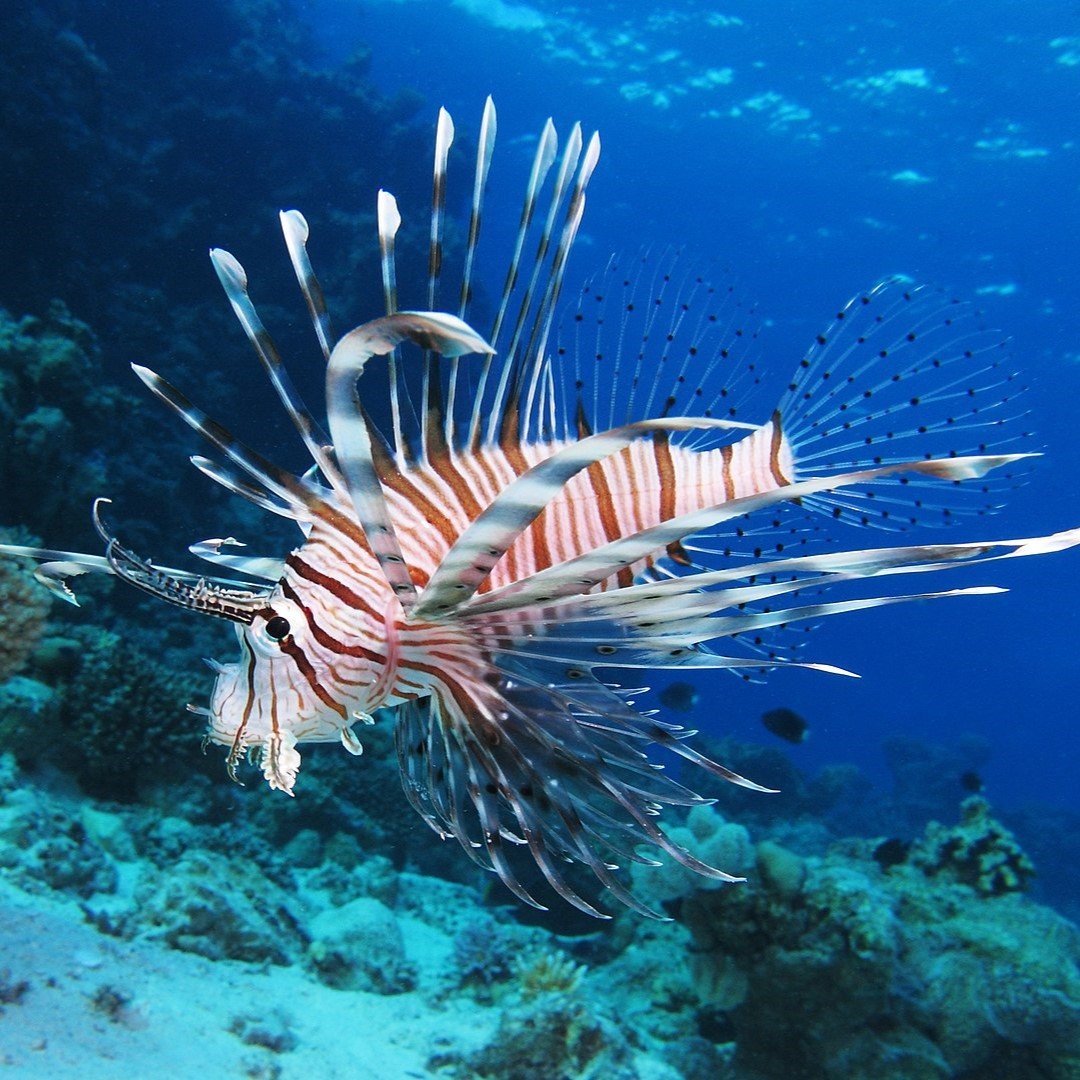
Lionfish, the striking yet ecologically problematic predators, have become a significant concern in the world of scuba diving and marine conservation. These ornate, fan-like finned creatures are native to the Indo-Pacific but have established invasive populations in the Atlantic Ocean and Caribbean Sea. The Indo-Pacific lionfish species, such as the Pterois volitans and Pterois miles, have disrupted these ecosystems since their introduction.
Meet the Lionfish
Lionfish, known for their ornate, fan-like fins and vibrant coloration, are native to the Indo-Pacific but have established invasive populations in the Atlantic Ocean and Caribbean Sea. The Indo-Pacific lionfish species, such as the Pterois volitans and Pterois miles, have disrupted these ecosystems since their introduction.
Top of the Food Chain
Lionfish are apex predators, meaning they occupy the highest position on the marine food chain. This status is attributed to their voracious appetite and lack of natural predators in the invaded regions. In their natural habitat, the Indo-Pacific, they play a vital role in controlling prey populations. However, their introduction to new environments has caused a cascade of ecological challenges.
The Lionfish Predatory Power
Lionfish have several traits that make them formidable hunters:
Camouflage and Ambush: Their elaborate appearance may seem purely decorative, but it helps them blend into their surroundings, making them excellent ambush predators.
Venomous Spines: Lionfish possess venomous dorsal and pectoral spines, which they use to immobilize their prey and deter potential threats.
Rapid Reproduction: Female lionfish can produce thousands of eggs every few days, leading to rapid population growth.
The Ecological Impact
The lionfish invasion has wreaked havoc on local marine ecosystems:
Dwindling Native Species: Lionfish are opportunistic feeders and consume a wide variety of prey, including juvenile fish, crustaceans, and even cleaner fish that serve vital roles in reef health.
Altered Prey Behavior: The presence of lionfish has led to changes in prey behavior, with some species hiding more or becoming less active, affecting the overall balance of the ecosystem.
Competition with Predators: While lionfish lack significant natural predators in the invaded regions, they do face some challenges. Groupers and large snappers have been observed consuming lionfish. However, their ability to control lionfish populations is limited due to the lionfish’s venomous spines.
Scuba Diving and Conservation
As scuba divers, it’s essential to be aware of the lionfish invasion and its impact on the underwater world. Fortunately, divers can play a role in mitigating this issue:
Lionfish Hunts: Some regions organize lionfish hunting events, where divers are encouraged to capture and remove lionfish from the environment.
Support Conservation Efforts: Support organizations and initiatives focused on lionfish control and invasive species management.
Responsible Diving: Practice responsible diving by not disturbing the delicate marine ecosystem and respecting local regulations.
Share Your Thoughts
While lionfish are undeniably captivating creatures to encounter on a scuba diving expedition, their presence as invasive apex predators presents a significant challenge to the delicate balance of underwater ecosystems. Though they face limited natural predators in their invaded regions, it is our responsibility as divers to be informed and engaged in efforts to manage and control their populations, ensuring that our beloved marine environments remain healthy and vibrant for future generations of divers to explore and appreciate. Together, we can help preserve the beauty and diversity of the underwater world.
We value your insights and experiences. If you have encountered lionfish during your scuba diving adventures or have thoughts on how to address the lionfish invasion, please share them in the comments section below. And don’t hesitate to contact us via our contact form.
Happy diving and conserving!